Showing posts with label Ranko Hanai. Show all posts

Monday, 13 October 2025

Kenka tobi / 喧嘩鳶 (‘Fighting Firemen,’ 1939)

Obscure Japanese Film #222


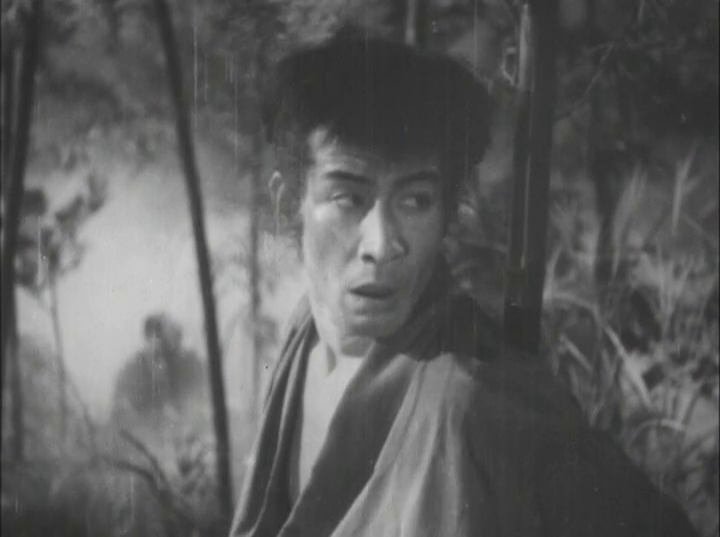
Kazuo Hasegawa


This Toho Eiga production was based on a newspaper serial novel by Kanji Kunieda (1892-1956), who specialised in stories set in the Edo period and also wrote the source novel upon which Mizoguchi’s  Utamaro and His Five Women (1946) was based. The story of Kenka tobi concerns the genuine historical phenomenon of the samurai firefighting gangs of the Edo period, who were often in fierce competition with each other. 


Isuzu Yamada


The film features four of the big stars of Japanese cinema in the late 1930s: Kazuo Hasegawa, Isuzu Yamada, Ranko Hanai and Yataro Kurokawa. Directed by Tamizo Ishida, who also made Fallen Blossoms (1938) and the previously-reviewed Flower-Picking Diary (1939), it was a big budget production originally released in two parts and featuring impressively large sets (much of which goes up in flames) and hundreds of extras. 


Ranko Hanai


Kenka tobi zenpen (‘Fighting Firemen Part 1’) ran 73 minutes and, while I was unable to find a reliable running time for Part 2 (Kenka tobi kohen), I think it’s safe to assume it was a similar length. What we are left with is an 89-minute version cobbled together from the two original parts, so it’s likely that nearly an hour has been chopped out, and there are certainly elements of the story that are a little unclear. 


Yamada and Hasegawa

What remains has Kichigoro (Hasegawa), a firefighter from the Kaga-tobi gang, coming to the rescue of Omon (Hanai) when some villains try to abduct her in the street. Omon is the sister of the Ha-gumi gang’s Jirokichi (Kurokawa). She falls in love with Kichigoro, but this is complicated as he belongs to the rivals of her brother’s gang (shades of Romeo and Juliet) and also because Koina (Yamada), a geisha who knows him as a client, is already in love with him…


Hasegawa and Yataro Kurokawa


Although it’s a meller aimed squarely at the box office, there’s a good deal of subtlety in Ishida’s direction here, and it’s really very well staged and shot throughout, while performances are free from the hamminess you might expect from this type of material. With so few early Japanese talkies available in such good quality before it mostly became military propaganda, Kenka tobi is a rare treat. I doubt that we’ll ever get to see the original two parts in full and would not be surprised if they no longer exist – it was quite common in the Japanese cinema at the time for studios to make two-part films, then edit them down to a single feature and apparently bin the rest. Other examples that spring to mind are Kon Ichikawa’s 365 Nights (1948) and The Burmese Harp (1956), and The Spider Man (1958).

A remake appeared in 1961 under the title Edokko-hada, directed by Masahiro Makino. 


Thanks to A.K. 

Watch on my YouTube channel here (with English subtitles) 

Wednesday, 23 July 2025

The Makioka Sisters / 細雪 / Sasameyuki (‘Light Snowfall’, 1950)


Hideko Takamine


**The first four paragraphs are mostly identical to those in my review of the 1959 version**

Junichiro Tanizaki’s novel Sasameyuki is widely recognised as a classic of Japanese literature. Translated into English as The Makioka Sisters in 1957 by Edward G Seidensticker, it’s remained constantly in print ever since. The book was originally published in serial form beginning in 1943, but this was soon halted by the Japanese War Ministry – not because it criticised the government, but because, according to them at the time, ‘The novel goes on and on detailing the very thing we are most supposed to be on our guard against during this period of wartime emergency: the soft, effeminate, and grossly individualistic lives of women.’* I would have thought they should have been more worried about the enemy, but in any case, Tanizaki was forced to wait until the war had ended to resume publication, with the final instalment appearing in 1948.


Yukiko Todoroki


The story itself takes place between 1936 and 1941, ending around eight months before the attack on Pearl Harbour, and it seems that Tanizaki’s intention was partly to provide a record of a way of life he had seen rapidly vanishing before his eyes. The Makioka sisters are four adult siblings whose parents are deceased. Once a grand family, their fortunes are on the wane but they remain very well-to-do in comparison with most Japanese and keep a number of servants. The eldest, Tsuruko (played here by Ranko Hanai in what amounts to a minor role), lives apart from the others with her husband and children in what is referred to as the ‘main house.’ She is a peripheral character, but, as the senior surviving member of the family, the other sisters must defer to her and her husband before making any important decisions. Tsuruko later goes to live in Tokyo when her husband has to relocate for his job, but her sisters remain in their hometown of Osaka.
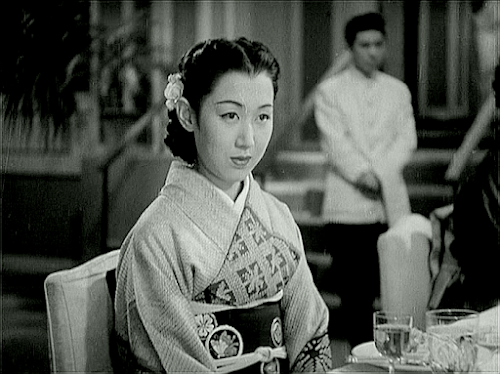
 

Hisako Yamane

The other three sisters live together. In order of age, they are Sachiko (Yukiko Todoroki, who went on to play Tsuruko in the 1959 version), Yukiko (Hisako Yamane) and Taeko, familiarly called ‘Koi-san’ (Hideko Takamine). Sachiko is married to Teinosuke (Seizaburo Kawazu), with whom she has one child, Etsuko (Takako Yamazaki). Although Sachiko is held responsible for her two younger sisters by the main house, little of the drama revolves around her. Instead, much of it concerns the attempts to find a husband for Yukiko, whose shy and sometimes stubborn nature makes this difficult. Ever since her original fiancée was killed in an accident, each marriage proposal has come to naught for one reason or another, and Yukiko is already approaching 30 when the story begins. Complicating matters further is the fact that Taeko must wait until Yukiko is married before getting married herself in order not to humiliate Yukiko and leave her looking like an old maid that nobody wants. Taeko is the closest thing to a rebel in the family, generally doing as she likes and indulged by her older sisters, who make allowances for her due to the fact that their parents died when she was so young. She has a long-running on-and-off relationship with the wealthy Kei-bo (Haruo Tanaka). 


Hideko Takamine

The sisters are likeable characters who live their lives trapped in a web of etiquette. Overly-concerned with what others think, they are unable to make a move without first ensuring that what they do will not offend anyone else or damage their own social status, but there’s little in the way of arrogance about them. Rather, they are simply behaving according to the rules by which they were brought up and it doesn’t even occur to them to do otherwise. In the book, Tanizaki paints a minutely-detailed picture of their lives, but never tells us what to think about it. The future of the family is left open at the end, but it’s impossible to be unaware of the dark cloud of war that awaits them just over the horizon, and no doubt Tanizaki planned it that way.


Haruo Tanaka


This first film version of the novel was produced by Shintoho and is probably the most faithful of the three overall. According to Japanese Wikipedia, it had ‘a budget of 38 million yen, an unprecedented sum for a film at the time.’ The 1959 version updated the story to what was then the present day, but this one retains the pre-war setting of the book and, being around 35 minutes longer, is also able to fit a little more in. Both the 1950s adaptations were scripted by Toshio Yasumi, who in this one includes the dark spot on Yukiko’s face that comes and goes and is supposedly a common affliction of unmarried women (something which was dropped from the 1959 film). 


Hisako Yamane

The later version is probably the more technically (and visually) impressive of the two – here, although there is quite an impressive flood sequence, we only hear about Koi-san’s rescue – but this one is well-done for its time and much superior to the one other film I’ve seen by its director, Yutaka Abe (the recently-reviewed 1956 film The Confession). He was no flashy stylist; instead, he rightly lets the camera be the actors’ friend here, using close-ups judiciously and tracking shots when necessary. Another asset is the music by Kurosawa favourite Fumio Hayasaka, which is certainly one of the less grating and more effective scores of its era. 


Although technically an ensemble piece, this is Hideko Takamine’s film all the way, partly because her character goes through the most changes and she gets the lion’s share of the screen time, but also because she’s so photogenic and charismatic that everyone else seems to fade into the background when she’s in view. As Koi-san, she rejects her family’s obsession with tradition and form, deciding that a man’s actions are more important than his education or lineage – an ideology which would have found favour with the occupying Americans whose approval was needed for all films produced in Japan at the time. All in all, albeit not impressive enough to qualify as a masterpiece, this is at least a fine version of a literary classic, with a great star at its centre, and as such it deserves to be restored and more widely seen.

Bonus trivia: Future star Kyoko Kagawa appears briefly in one of her first roles as Itakura’s sister.

Thanks to A.K.

Yamane and Takamine


Sunday, 30 March 2025

Five Sisters / 女の暦 / Onna no koyomi (‘A Woman’s Calendar/Almanac’, 1954)

Obscure Japanese Film #177

Kyoko Kagawa


Yoko Sugi


Kuniko (Yoko Sugi), a schoolteacher who is reluctant to get married, and Mie (Kyoko Kagawa), who is around nine years younger and has a very different attitude – unbeknownst to Kuniko, she’s in love with a burly pig farmer (Gen Funabashi) and wants to marry him. 


Gen Funabashi, Kyoko Kagawa and friend


As the anniversary of their father’s passing is approaching, Kuniko and Mie decide that it’s time to have a family get-together, so they invite their three elder sisters to visit. The most senior, Michi (Kinuyo Tanaka), lives in Hiroshima and has five children of her own and a lazy, pachinko-addicted husband (Hisao Toake), while Takako (Yukiko Todoroki), who lives in Tokyo, is married to a man who’s in prison for getting caught up in a demonstration. Finally, there’s Kayano (Ranko Hanai), who lives in Osaka and is unhappily married to Sugie (Masao Mishima), who’s always unfavourably comparing her to his first wife. Will the examples of the three visiting sisters deter Mie from marriage as they have in Kuniko’s case? Or has she been scared into thinking she must get married in order not to end up like Ofuku (Eiko Miyoshi), a crazy old maid who lives on the island? 


Kinuyo Tanaka

 
Yukio Todoroki

Ranko Hanai


This Shintoho production was based on a story by Sakae Tsuboi, entitled simply Koyomi (‘calendar’ or ‘almanac’) and first published in 1940. Tsuboi (1899-1967) was the youngest of five daughters from Shodoshima, so she may well have based the character of Mie on herself. She also wrote Twenty-Four Eyes, which is also set on Shodoshima. Her only full-length work to have been translated into English, it was, of course, turned into a highly successful film by Keisuke Kinoshita in 1954. 


Like Policeman’s Diary (1955), the only other film I’ve seen by director Seiji Hisamatsu, this one is also reminiscent of Kinoshita’s work. Looking back at my review of that film, I described it as ‘a charming, bittersweet comic drama from a more innocent age’, a description which could equally apply to Five Sisters. However, unlike Kinoshita – who had a fondness for slightly gimmicky visual techniques – Hisamatsu’s direction is the kind that never draws attention to itself. Nothing terribly dramatic happens in this film, yet somehow I was never bored, and few films have dealt with the theme of marriage in such a light but thoughtful way.  It was screened in competition at Cannes in 1955, but seems to have rarely been seen since, at least outside of Japan. 


 DVD at Amazon Japan (no English subtitles)

 Thanks to A.K.

Saturday, 29 July 2023

The Way of Drama / 芝居道 / Shibaido (1944)

Obscure Japanese Film #71

Kazuo Hasegawa

Set during the Russo-Japanese War of 1904-5, this Toho production stars Kazuo Hasegawa as Shinzo, a young stage actor in Osaka whose newfound popularity playing military heroes has gone to his head. He has a sweetheart, Hanaryu (Isuzu Yamada), a shamisen player he is planning to marry, but his master, Heikichi (Roppa Furukawa), thinks he has become too arrogant and will never succeed in the long-term if he allows himself to be distracted by marriage. Heikichi decides to ask Hanaryu to break off the relationship for Shinzo’s own good… 

Isuzu Yamada


In his film The Song Lantern from the previous year, director Mikio Naruse had managed to avoid making military propaganda, but by this point it was a case of either spread the message the authorities wanted to put across or don’t make a movie. The Way of Drama was adapted by the prolific Toshio Yasumi based on a novel by Koen Hasegawa (1904-77). It’s unclear whether the propaganda aspect was present in the original, but the film certainly contains a rather obvious message about the importance of self-sacrifice. The character of Heikichi, the theatre director, is portrayed as a very noble man because he puts on plays about heroic soldiers and keeps ticket prices low so that as many people as possible will learn that the goal of destroying the enemy is far more important than one’s own paltry little life. Of course, this is unlikely to strike a chord with many viewers nowadays, but if we can ignore this aspect of the film, there are some pleasures to be found in the fine performances of Hasegawa and Yamada. Incidentally, the one scene in which Hasegawa is really bad is the opening scene in the theatre, where he plays a mortally wounded soldier delivering his patriotic last words as he expires – could Hasegawa and Naruse have been subtly taking the rise out of the military here?

Hasegawa and Eitaro Shindo


The supporting cast is also strong and features Takashi Shimura as a rival theatre director, Ranko Hanai as Heikichi’s cheerful daughter and Eitaro Shindo as a seasoned elder thespian. Directed by Naruse, it goes without saying that The Way of Drama is well-made, although working under the constraints and with the limited resources that he was at the time, it is obviously not one of his best. 

Takashi Shimura, Roppa Furukawa and Ranko Hanai


Saturday, 4 March 2023

Hirate Miki / 平手造酒 (1951)

Obscure Japanese Film #49

Ranko Hanai


Hirate Miki (c.1814-1844) was a swordsman who became a bodyguard for a yakuza boss and died in a fight with a rival gang. There were numerous films about him throughout the 1920s and ‘30s, but these abruptly ceased at the time that Japan entered WW2, presumably because Miki was killed at a young age and his story would have been seen as defeatist. His first reappearance in a movie after the war was as a supporting character in Shintoho’s Tenpo suiko-den: Otone no yogiri (1950), in which he had also been played by So Yamamura, the star of this film. 

So Yamamura


Hirate Miki is reminiscent of Kurosawa’s Sanshiro Sugata (1943) in that the heroes of both are martial arts experts who undergo a spiritual crisis which causes them to stray from the path of righteousness before they finally redeem themselves. Aside from the choice of martial art and the lighter ending of Kurosawa’s film, the main point of difference between the two works is that Miki, as played by Yamamura, is an unlikeable and charmless character; ‘He must have quit smiling in the womb!’, one character aptly comments. Yamamura seems an odd choice as he was already 41 when this was made and is clearly too old for the role. 


Miki starts out as an idealistic young man whose skill sees him move quickly up the ranks. However, he is frustrated in his romantic ambitions and becomes bitter about the importance of money and status. One night, he gets drunk, trashes a restaurant and loses a lucrative new position as a result. Admonished by the head of his dojo, he nevertheless continues to be insufferable, frequently beating the crap out of his poor students with his bamboo practise sword.  Eventually, he runs off with a geisha, Masuji (Ranko Hanai from Kurosawa's Sanshiro Sugata). She is another disappointed idealist, having worked hard for years to become a top shamisen player only to find that her male clients have little interest in that particular skill. Meanwhile, Miki falls ill with tuberculosis and ends up working for a yakuza boss. There’s a splendidly ironic moment when Miki begins coughing up blood after slaying a bunch of rival gang members; his friend, standing amid the corpses, finally decides the moment has come to shout for a doctor.


The narrative of the film is rather choppy to say the least – hardly surprising as the version I saw ran 64 minutes, and it seems there was originally a longer 107-minute version. With 43 minutes missing, it’s not really possible to judge this film fairly in my opinion, but what remains is certainly worth a look for the fine cinematography (by Kikuzo Kawasaki) and a number of nice touches, such as the paper crane made by Masuji which finally softens the heart of old misery-guts Miki. 


Further Kurosawa connections include a cameo by eccentric geriatric-specialist Bokuzen Hidari as a priest and the fact that this was the second script by the great screenwriter Shinobu Hashimoto to be filmed (Rashomon being the first). Director Kyotaro Namiki does fine work here but is remembered, if at all, for a couple of horror films he made towards the end of his career, The Military Policeman and the Dismembered Beauty (1957) and Vampire Bride (1960).