Showing posts with label Keigo Kimura. Show all posts

Sunday, 28 June 2026

Tobira o hiraku onna / 扉を開く女 (1946)

Obscure Japanese Film #270

Yumeji Tsukioka

Yokohama c.1880. Okinu (Yumeji Tsukioka) is a young woman who sings and plays the gekkin (aka yueqin or ‘moon lute’) in restaurants to earn a living. She’s in love with Shinkichi (Kanji Koshiba), a carriage driver studying to be a lawyer under windbag Professor Naito (Mitsusaburo Ramon).


Kanji Koshiba


Her neighbour, Kikue (Yaeko Mizutani I, frequently confused with her daughter, Yaeko Mizutani II), is a widowed sewing instructor who was forced to endure an unhappy marriage. As a young woman, she had been in love with Takano, but unable to marry him as he was an ashigaru (samurai of the lowest rank). Instead, she was made to recite the ‘Three Obediences of a Woman’ – which are first to her parents, second to her husband and finally to her children – until it nearly drove her mad and then had to marry a man who had no feelings for her.


Yaeko Mizutani


When the supposedly liberal Professor Naito proves objects strongly to Shinkichi’s intention to marry Okinu, Kikue is determined that Okinu not suffer the same fate, so she takes matters into her own hands and visits the professor herself…


Misusaburo Ramon (supposedly!)


Produced by Daiei at their Kyoto studios, this was supposedly based on an original screenplay by Yoshikata Yoda. However, Yoda clearly stole the plot from Kyoka Izumi’s 1907 novel Onna keizu, the multiple film versions of which include Teinosuke Kinugasa’s The Romance of Yushima and Kenji Misumi’s 1962 version (the latter of which had a screenplay by Yoda).


This was director Keigo Kimura’s first post-war film and the conditions he had to work under would have been quite restrictive this early on during the occupation, when the authorities would only give the green light to pictures that promoted democracy and were against feudalism. This one is not terribly subtle in its approach and contains dialogue such as, “I despise such feudalistic thinking! Japan still hasn’t managed to break free from it…”, etc etc.


Yaeko Mizutani


The acting is not terribly interesting either, with Yaeko Mizutani’s theatrical origins being all too obvious and her decision to speak like Minnie Mouse when playing the young Kikue in the flashbacks especially regrettable. Director Kimura manages some nice moments here and there, but overall this is a contrived and sentimental affair which has not aged well.


A note on the title:

A few slightly different variations are possible but, because the title seems to refer to Kikue, who opens a (metaphorical) door for Okinu – and potentially for other women in similar positions – the most apt translation is perhaps ‘The Woman Who Opened Doors’.


Thanks to A.K.

If you’d like to support this blog, you can Buy Me a Coffee.


Sunday, 11 May 2025

Yaneura no onna tachi / 屋根裏の女たち (‘Women in the Attic’, 1956)

Obscure Japanese Film #187


Yuko Mochizuki


Residing in a small seaside town in which fishing is the main industry, Okin (Yuko Mochizuki) is a single mother with a modest noodle restaurant where business is slow, so she hires former stripper Harumi (Mayumi Kurata) to serve the customers and keep them entertained, successfully increasing the number of male punters as a result. 


Yasuko Kawakami


However, Okin has an innocent teenage daughter, Oko (Yasuko Kawakami), who is about to graduate from high school and comes home one day to find her mother has gone to the shops and Harumi is upstairs having sex with a man. When Okin finds out, Harumi confesses that she had taken money from the man and offers to split it with her. Being a pragmatic woman who knows an opportunity when she sees one, Okin soon dismisses her qualms and it’s not long before she has half a dozen prostitutes living upstairs and noodles have become a mere afterthought. 


Kyoko Kishida


Each of the women has their own sad story, including Mary (a young Kyoko ‘Woman in the Dunes’ Kishida), who has been separated from the child she had by an African-American G.I. Meanwhile, Oko attracts the attention of Kawai ((Eiji Funakoshi), a seemingly nice guy who gives her a lift on his bike one day only to take her into a secluded spot and rape her…


Eiji Funakoshi


This Daiei production is a well-made and mostly well-acted film which deserves recognition for dealing frankly with some controversial matters. It’s surely no coincidence that, like Mizoguchi’s Street of Shame and Kawashima’s Suzaki Paradise: Red Light District, it appeared in 1956 when the question of prostitution was a hot topic in Japan (it was finally outlawed the following year, five years after the American occupation ended). 


Women in the Attic suffers from a number of flaws – some plot threads are left frustratingly unresolved, while the transformations of both Okin from noodle woman to brothel-keeper and Kawai from nice guy to rapist are too abrupt to be fully convincing. There’s also, yet again, the misogynist cliché of a woman falling in love with her rapist – an unexpected element considering that the film was based on a novel published in 1950 by female author Sakae Tsuboi, who had also written Twenty-Four Eyes and provided the source story for Five Sisters (1954). However, it’s entirely possible that this was an invention of director Keigo Kimura and his co-adaptor, Toshiro Ide and, to be fair, this unfortunate aspect is somewhat balanced out by a scene in which Harumi confronts Kawai and slaps him so hard she nearly takes his face off. 


Mayumi Kurata


Another point that bothered me is the following: Okin’s motivation for her new business venture is supposedly to give Oko a better life by being able to pay for her to have classes in ikebana and dressmaking, and thereby find a good husband. Of course, it’s no surprise that Oko is the one she ends up hurting the most, but the explanation given for this is that Kawai won’t marry her because she’s the daughter of a madam, whereas it seems clear from what we’ve seen of him that this is just an excuse on his part and that he’s simply a louse who would never have married her anyway. But perhaps I’m nitpicking too much – these misgivings aside, this certainly remains an interesting film worth seeing, partly for its refusal to vilify Okin, opting instead to portray her as a well-meaning but unfortunate and rather foolish woman. 


Yuko Mochizuki, the unlikely star of this film, may have lacked film star looks but was a consummate actress who won awards for her roles in Kinoshita’s A Japanese Tragedy (1953), Naruse’s Late Chrysanthemums (1954) and Imai’s The Rice People (1957). A socialist, she later became a politician and even directed three films (with running times of 40-50 minutes): Umi o wataru yujo (‘Friendship Across the Sea’, 1960) about children being repatriated to Korea; Onaji taiyo no shita de (‘Under the Same Sun’, 1962) which dealt with the discrimination suffered by mixed-race children; and Koko ni ikeru (‘Living Here’, 1962), a documentary commissioned by the All Japan Liberal Labour Union portraying the daily lives of labourers and their families (see https://www.repre.org/repre/vol44/topics/tatsumi/).

Thanks to A.K. 

Amazon Japan (no English subtitles)


Thursday, 31 October 2024

Hot Spring Doctress / 温泉女医 / Onsen joi (1964)

Obscure Japanese Film #143


When a new doctor arrives to replace the old drunk Dr Yabuuchi (Ichiro Sugai) at a hot spring resort in Izu, the residents are shocked to learn that his replacement is (gasp!) a woman, Dr Shiotsuki (Ayako Wakao). She proves to be strong-willed and soon gains the respect of the often badly-behaved residents, who include Dr Yabuuchi’s best friend, randy old codger Tahei (Ganjiro Nakamura playing to type); Yabuuchi’s rotund son, Masahiko (Taro Marui), who looks after the local orphans; and cynical geisha Omura (Utako Shibusawa), who Dr Shiotsuki tries to talk out of having an abortion…


This Daiei production was the final entry in their series of five ‘onsen’ B-pictures which began with Onsen geisha in 1963 (not to be confused with Toei’s later ‘Onsen Geisha’ series which ran from 1968-75). It’s one of nine films that Wakao made with director Keigo Kimura (1903-86), a veteran who made his first film in 1930 and retired two films after this one, having directed 93 pictures. His filmography covers a wide range of genres, including a number of prestigious literary adaptations, and his 1955 film Sen-hime was nominated for the Palme d’Or. Like many of his movies, that one starred Machiko Kyo, whom he had been responsible for bringing to prominence with his 1949 film, A Fool’s Love. Hot Spring Doctress seems to represent something of a comedown for Kimura, whose work is hard to judge overall as so little of it is currently accessible. 

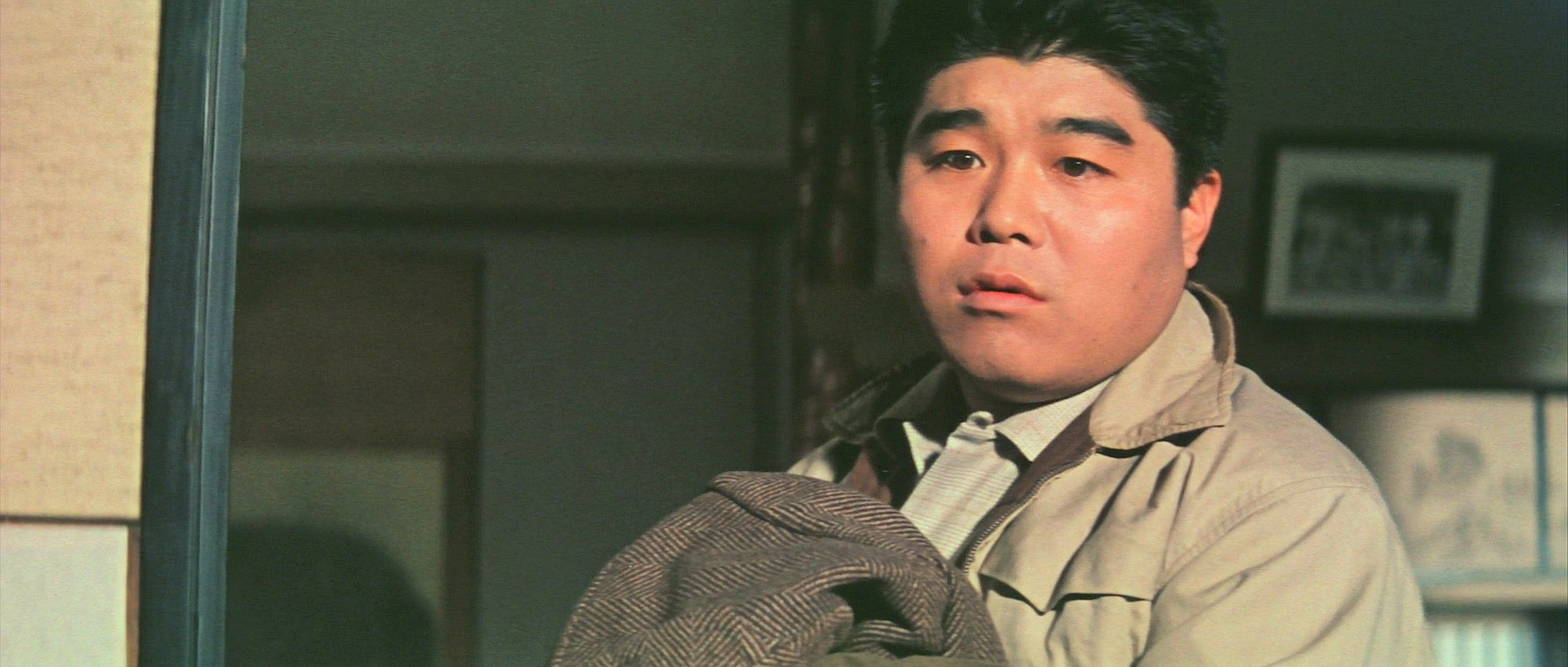
Taro Marui


On the whole, this is a rather dated but harmless comedy which is not as sexist as it might have been and passes the time pleasantly enough, getting by largely on the considerable charm of its star, Ayako Wakao. It’s also hard to dislike a film in which the romantic male lead is the portly Taro Marui, a Daiei contract actor who had scored a hit in Zuzushii yatsu (‘Shameless Guy’), a TV drama produced by Daiei in 1963. Marui subsequently received many offers from other TV production companies, but Daiei refused to loan him out. His career suffered when he spoke out about this, and he committed suicide in 1967.

Thanks to A.K., and to Coral Sundy for the English subtitles, which can be found here.

DVD at Amazon Japan