Showing posts with label Ichiro Sugai. Show all posts

Friday, 27 February 2026

Kanashiki kuchibue / 悲しき口笛 (‘Sad Whistling’, 1949)

Obscure Japanese Film #249

Hibari Misora


Mitsuko (Hibari Misora) is a homeless child who hangs around with the day labourers at the docks in the Sakuragicho district of Yokohama. They look after her and she keeps them entertained by singing, for which she has a remarkable talent. Mitsuko dresses as a boy, but it’s never explained whether this is simply because it was easier for her to get hold of boy’s clothes or for some other reason. However, she is soon adopted and dressed in girl’s clothes by a waitress named Kyoko (Keiko Tsushima) and her father, Osamu (Ichiro Sugai), a classical violinist reduced to busking to make a living.


Keiko Tsushima

Ichiro Sugai


Meanwhile, Mitsuko’s older brother, Kenzo (Yasumi Hara), a musician, has finally made it back to Yokohama after being posted overseas during the war and is searching for his sister but has also become involved in a smuggling racket. One night he runs into Osamu, who is extremely drunk and singing a song which Kenzo wrote but never published. Kenzo knows that Osamu could only have heard the song from Mitsuko, but Osamu is too intoxicated to provide any useful information. When Osamu subsequently goes blind as a result of drinking bootleg liquor containing methanol, Kyoko’s efforts to raise money to pay his medical bills result in her being forced into helping the same gang of smugglers that Kenzo is involved with...


Yasumi Hara


Although it lacks big Hollywood-style production numbers, this Shochiku production has enough songs that it certainly qualifies as a musical. It was based on a story by the prolific Toshihiko Takeda (1891-1961), whose work also provided the basis for Tomu Uchida’s Policeman (1933) and Hiroshi Shimizu’s Why Did These Women Become Like This? (1956). It was the third film to be directed by Miyoji Ieki, who would become known for films dealing with childhood, although this particular film has the feel of an assignment, and its main raison d’être was probably to function as a vehicle for singing prodigy Hibari Misora. She was 12 at the time but looks younger; it was her fifth film appearance but her first starring role. Here, she comes across as a sort of Japanese Shirley Temple, which might not be entirely by chance – its worth remembering that the film was produced during the occupation when filmmakers needed the approval of the American authorities. As well as Hibari’s singing, Keiko Tsushima – a trained dancer as well as actor – also gets to strut her stuff.


Kanashiki kuchibue is a contrived and sentimental tale but it’s quite well-made and lent a little interest due to its portrayal of a chaotic post-war world in which people are forced to do whatever they can to survive.


Hibari Misora


Sung by Hibari, the title song was released about a month before the movie and became a huge hit.


DVDat Amazon Japan (no English subtitles)

If you enjoy this blog, feel free to Buy Me a Coffee!


Sunday, 28 September 2025

Kirai Kirai Kirai / 嫌い嫌い嫌い / (‘Hate hate hate’, 1960)


Ichiro Sugai

Atsuko Kindaichi


Jiro Tamiya


Junko Kano

 
Sachiko Hidari

Bokuzen Hidari


Kazuko Matsuo


Saturday, 12 July 2025

Confession / 色ざんげ / Iro zange (‘Confession of a Love Affair’, 1956)


Yuasa (Masayuki Mori) is a middle-aged painter in the process of divorcing his wife (Hisano Yamaoka) and in love with the much younger Tsuyuko (Mie Kitahara), who reciprocates his feelings. However, Tsuyuko’s father (Ichiro Sugai) is dead set against the match and packs her off to America in the hope that she’ll forget about Yuasa. While she’s gone, Yuasa decides he’d better accept the situation and gets married instead to another much younger woman, Tomoko (Keiko Amaji), but she just likes the idea of being married to a famous painter and continues to see her former student boyfriend, Kunihiko (Joe Shishido) on the sly. Then Tsuyuko returns from America…


Mie Kitahara


This Nikkatsu production was based on a novel originally published as a serial between 1933 and 1935 by Chiyo Uno (female, 1897-1996). The character of Yuasa was based on the painter Seiji Togo (1897-1978), with whom Uno had an affair that lasted from 1930-34. The story must have seemed old-fashioned even in 1956, and it’s doubtful that the film was very successful commercially as Uno’s work was not adapted for the screen again until 1984. Nikkatsu is also a studio not known for its tragic love stories and would soon focus its attention on producing gangster movies aimed at the youth market. 


Masayuki Mori and Keiko Amaji


The fact that the central character of Yuasa never really convinces or comes to life leaves this film dead in the water. The other characters are constantly making a fuss about what an amazing artist he is, but we see no evidence of this except a not particularly impressive portrait of Tsuyuko dressed like Little Bo Peep. As we never see the beginning of their relationship, it’s impossible to understand how these two were drawn to each other in the first place. Worse still, it seems that we’re expected to sympathise with how hard life must be for Yuasa as a wealthy middle-aged younger-woman magnet who lives a life of idleness. When Tsuyuko’s father understandably prevents him from getting what he wants, Yuasa mopes his way through the remainder of the film wallowing in self-pity, Masayuki Mori rarely deviating from his patented Staring Into The Void expression. 


Kinuyo Tanaka

 
Joe Shishido

The cast also includes Kinuyo Tanaka (wasted here as a friend of Yuasa’s) and a thin-faced Joe Shishido before the cheek job, but it’s the great Hisano Yamaoka who steals it here as the ex-wife who’s probably supposed to be a shrew, but for whom I felt quite sympathetic, though not quite as much as I did for Yuasa’s second wife Tomoko when she complains about being, ‘Bored, bored, bored!’ 


Hisano Yamaoka


This is the first film I’ve seen by director Yutaka Abe (1895-1977), who had lived in America from around 1912-24 and worked in Hollywood, first as an extra and later as a featured actor. This experience led to him becoming a director after his return to Japan, and he directed his first film there in 1925. I can’t say that I was much impressed by his work in Confession, in which he lets the same scene between Mori and Shishido play out twice (first on a beach, then again immediately afterwards in a hotel room) and uses waves crashing against rocks as a visual metaphor for passion – something I’m pretty sure was a hoary old cliché even then.

Amazon Japan (no English subtitles)

Thanks to A.K. 


Thursday, 31 October 2024

Hot Spring Doctress / 温泉女医 / Onsen joi (1964)

Obscure Japanese Film #143


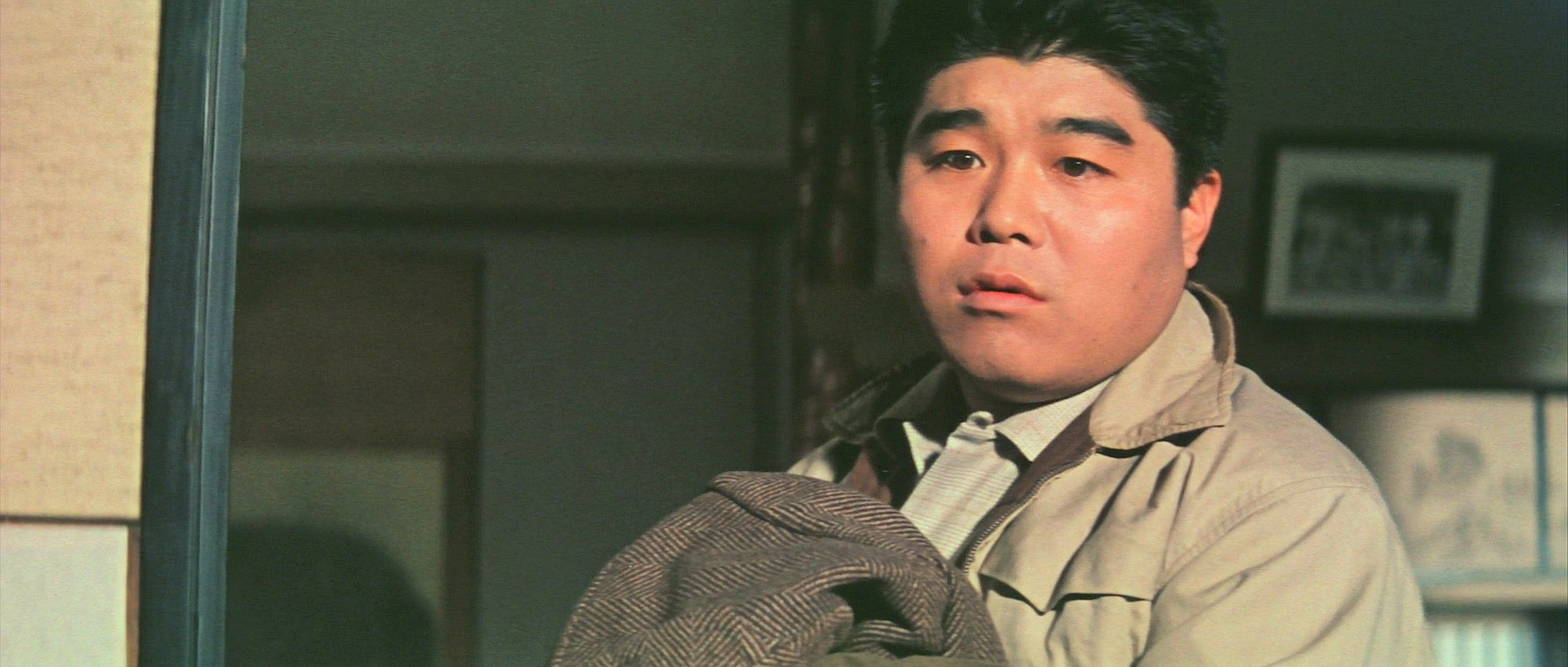
When a new doctor arrives to replace the old drunk Dr Yabuuchi (Ichiro Sugai) at a hot spring resort in Izu, the residents are shocked to learn that his replacement is (gasp!) a woman, Dr Shiotsuki (Ayako Wakao). She proves to be strong-willed and soon gains the respect of the often badly-behaved residents, who include Dr Yabuuchi’s best friend, randy old codger Tahei (Ganjiro Nakamura playing to type); Yabuuchi’s rotund son, Masahiko (Taro Marui), who looks after the local orphans; and cynical geisha Omura (Utako Shibusawa), who Dr Shiotsuki tries to talk out of having an abortion…


This Daiei production was the final entry in their series of five ‘onsen’ B-pictures which began with Onsen geisha in 1963 (not to be confused with Toei’s later ‘Onsen Geisha’ series which ran from 1968-75). It’s one of nine films that Wakao made with director Keigo Kimura (1903-86), a veteran who made his first film in 1930 and retired two films after this one, having directed 93 pictures. His filmography covers a wide range of genres, including a number of prestigious literary adaptations, and his 1955 film Sen-hime was nominated for the Palme d’Or. Like many of his movies, that one starred Machiko Kyo, whom he had been responsible for bringing to prominence with his 1949 film, A Fool’s Love. Hot Spring Doctress seems to represent something of a comedown for Kimura, whose work is hard to judge overall as so little of it is currently accessible. 

Taro Marui


On the whole, this is a rather dated but harmless comedy which is not as sexist as it might have been and passes the time pleasantly enough, getting by largely on the considerable charm of its star, Ayako Wakao. It’s also hard to dislike a film in which the romantic male lead is the portly Taro Marui, a Daiei contract actor who had scored a hit in Zuzushii yatsu (‘Shameless Guy’), a TV drama produced by Daiei in 1963. Marui subsequently received many offers from other TV production companies, but Daiei refused to loan him out. His career suffered when he spoke out about this, and he committed suicide in 1967.

Thanks to A.K., and to Coral Sundy for the English subtitles, which can be found here.

DVD at Amazon Japan