Showing posts with label Daisuke Ryu. Show all posts

Wednesday, 21 February 2024

Lake of Illusions / 幻の湖 / Maboroshi no mizuumi (1982)

Obscure Japanese Film #102

Reiko Nanjo

Shinobu Hashimoto (1918-2018) had one of the most impressive track records in screenwriting, including as it did not just many of Kurosawa’s best films, but also other cast-iron classics such as Hara Kiri (1962) and Sword of Doom (1966), together with a long list of other excellent pictures. In 1973, he formed his own production company, making two films in collaboration with Toho – Castle of Sand (1974) and Mount Hakkoda (1977) – both of which were big hits. These were followed by Village of Eight Gravestones (1977) for Shochiku, an even bigger hit, so when he and his production company asked Toho to co-produce Lake of Illusions, which he would write and direct, he was in an excellent position to get what he wanted and was given a free hand. As Hashimoto had also directed two previous features, they must have felt the risk to be minimal, and their optimism was such that the film was planned as Toho’s 50th anniversary celebration work. However, they probably failed to take into account that many of Hashimoto’s previous screenplays had been written in collaboration with others (which he himself always maintained was the best way) or under the firm guiding hand of top directors such as Yoshitaro Nomura, Masaki Kobayashi, Tadashi Imai, Kihachi Okamoto and others. Furthermore, Hashimoto was an eccentric, as anyone who reads his book Compound Cinematics – Akira Kurosawa and I can easily see. 

Daisuke Ryu


The genesis of Lake of Illusions is downright peculiar. As Castle of Sand had featured a lot of walking and Mount Hakkoda a lot of marching, he figured that it was time for a film with a lot of jogging. According to Japanese Wikipedia, Hashimoto also wanted to develop a story which included three elements – an image of a woman in traditional Japanese dress plunging a knife into a man; a statue of Kannon, the 11-faced Bodhisattva of mercy, located near Lake Biwa; and, randomly, computer technology. He spent two years working on the screenplay, but even he wasn’t convinced that he had successfully combined the three elements when the film went into production. 

Reiko Nanjo


The central character is Michiko, a 22-year-old woman who works in a weird theme hotel where she has to dress in character as Oichi, a woman from the past who came to an unfortunate end (played by Keiko Takahashi in a flashback sequence). Michiko has no interest in history and is doing the job purely for the money and planning to leave as soon as she has reached her savings goal. Her main duties are actually providing baths and sex to wealthy businessmen, something she finds tolerable as long as she’s ‘Oichi’ and not Michiko. She adopts a stray dog, whom she dubs ‘Shiro’, and goes for long runs with him along the shores of Lake Biwa on her days off, meeting a mysterious flute player (Daisuke Ryu) along the way. When Shiro is found dead from a head wound, she becomes obsessed with tracking down the killer and getting revenge… 


Hashimoto held open auditions for the part of Michiko. Out of 1,627 applicants, a young model named Reiko Nanjo was chosen, seemingly for her good looks, athleticism and willingness to disrobe. Unfortunately, she had no real acting experience, and Hashimoto was asking too much of a novice to carry the weight of such a huge part in a major production. The film features endless scenes of Nanjo jogging – she reportedly ran 4,500 km while playing Michiko – as well as constant close-ups of her, usually wearing the same sullen expression. Nanjo deserves respect for her hard work but, in her hands, Michiko comes across as a bit of a brainless bimbo, which was presumably not the intention. Perhaps a more experienced director could have provided better guidance, but here she seems over-exposed and under-directed, and she received poor reviews and few offers of work once the film was released. However, Akira Kurosawa (perhaps taking pity on Nanjo) gave her a small part in Ran, and she subsequently enjoyed a decade of modest success as an actress in TV dramas before quitting the entertainment industry and vanishing from public life. 
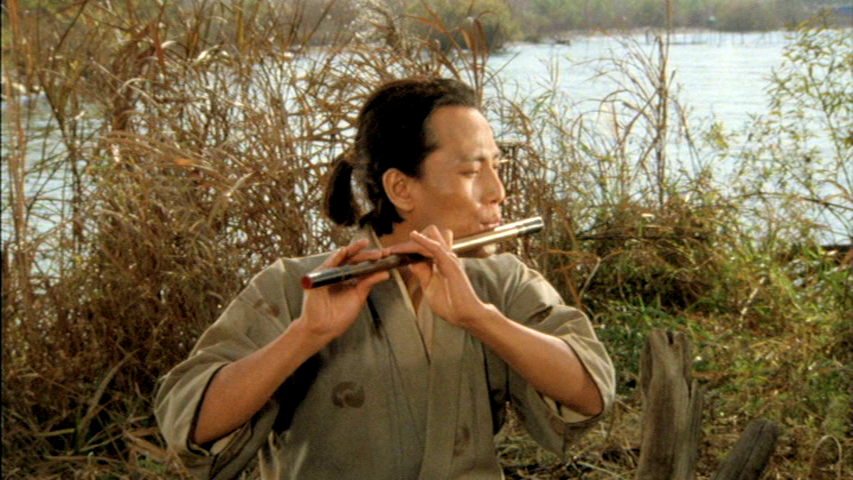
Daisuke Ryu


On its release, the film was so badly received that Toho pulled it from cinemas two weeks after release and effectively buried it. Shinobu Hashimoto’s magic touch had deserted him and he suddenly found himself persona non grata with the film studios. It’s not difficult to see their point of view – Lake of Illusions has a terrible script consisting of several disparate elements clumsily cobbled together, even relying on two unlikely coincidences to patch up the deficiencies in its plot, like using sticking plaster to cover a wound when a transplant is called for. It also feels insanely long at over 2 hours and 40 minutes, while the ending, which is akin to being catapulted into a completely different movie, has to be seen to be believed. 

Keiko Takahashi


With no TV broadcasts or VHS release, Lake of Illusions was virtually impossible to see until its eventual DVD release in 2003. It had come to be regarded as a legendarily bad film, but since then it has acquired a small cult following and has its defenders. While it does offer some incidental pleasures along the way, such as a chance to see the scenery around Lake Biwa, and a subtle music score by Yasushi Akutagawa, in my opinion the film ultimately deserves its reputation as Hashimoto’s grand folly, and his own verdict as expressed in Compound Cinematics is equally damning. 


Saturday, 9 September 2023

The Law of Hell / 地獄の掟 / Jigoku no okite (1982)

Obscure Japanese Film #76

Tatsuya Nakadai


This TV remake of the 1971 film known in English as Inn of Evil, which also starred Tatsuya Nakadai, was very much a family affair for the actor. Based on a Shugoro Yamamoto story entitled ‘Fukagawa Anrakutei’, the scripts for both were written by Nakadai’s wife, Yasuko Miyazaki, under her pen name of Tomoe Ryu. The other important personal connection for Nakadai is that most of the cast were students from his acting school, Mumeijuku (a notable exception is Hideo Murota, who plays the mysterious drunk portrayed by Shintaro Katsu in the earlier film). 


Nakadai was approaching 50 by the time of this remake, which is presumably why this time round he chose to play Ikuzo, the owner of the Anrakutei inn on a tiny island in Fukagawa (hence the title of Yamamoto’s story), rather than repeat his earlier part of Sadashichi the Indifferent, played effectively here by his student, the late Daisuke Ryu. 

Daisuke Ryu and Nakadai
 

One issue I have with Yamamoto’s story is that it rather wants to have its cake and eat it in the way we are expected to accept that a gang of hardened criminals turn into a bunch of sentimental softies as a result of hearing one hard-luck story. However, if you can swallow that and make allowances for the fact that this is not a 2-hour Masaki Kobayashi movie, but a 90-minute TV drama, this is a pretty decent effort. Having watched a few of Nakadai’s early ‘80s made-for-TV movies now, I’ve been quite impressed by how well-lit, shot and staged they are in comparison to the often visually drab television drama served up during this period in the West. The director for many of these was Akira Inoue (1928-2022), who had been a feature film director in the 1960s, making pictures such as Zatoichi’s Revenge (1965), but who worked mostly in television from the 1970s on. Nakadai is of course excellent as the philosophical father figure here, giving a mostly restrained performance until things heat up in the climax, when he even gets to engage in a little swordplay. 

Nakadai and Daisuke Ryu
 

Yasuko Miyazaki later adapted the story once more, this time for the theatre. It was first staged in 1997, a year after her death, with Nakadai again playing Izuko, and Nakadai has revived it several times since. 


Thanks to Samurai Vs Ninja for making this available on YouTube here.

Daisuke Ryu


Friday, 24 February 2023

Sanshiro Sugata / 姿三四郎 (1977)

Obscure Japanese Film #48

Tomokazu Miura and Kumiko Akiyoshi


Sanshiro Sugata (1943) was, of course, the directorial debut of a certain Akira Kurosawa, who had persuaded Toho Studios to buy the rights to Tsuneo Tomita’s just-published novel of the same name. Sugata is a fictional character based on Shiro Saigo (1866-1922), an early practitioner of judo who became one of the masters of the art. Tomita himself was the son of another judo champ, Tsunejiro Tomita, who had been an associate of Saigo’s. Kurosawa’s commercial instincts had proven sound on that occasion – so much so, in fact, that the studio pressured him into making a sequel, which was released just as the war was coming to an end. Between that film and this 1977 version, there had been a further four remakes, including a 1965 film produced by Kurosawa himself. This was apparently a scene-for-scene remake of the first two films, but it was not well-received by the critics and seems to have all but destroyed the career of its young director, Seiichiro Uchikawa, whose previous film (Samurai from Nowhere) had shown definite promise.

Kihachi Okamoto (right) on set


Kihachi Okamoto was an eccentric and often brilliant director whose work suffered a sharp decline in quality as the ‘60s ended and the ‘70s began. The reasons for this are debatable, but in my opinion none of his films from 1970 onwards really work, and his talent became less and less evident as time went on. This is a pity, because his mid-period movies such as Sword of Doom, Oh Bomb! and The Human Bullet are stunning. Unfortunately, his remake of Sanshiro Sugata (newly released on DVD in Japan) proves not to have been a return to form. In fact, it copies a great deal from the Kurosawa original, from the blurry point-of-view shot seen through the eyes of a nearly knocked-out opponent to the climactic fight on the windswept hill. There is one scene in which Okamoto subverts our expectations – in the original, Sugata had thrown away his geta (wooden sandals) when volunteering to drive judo master Shogoro Yano’s rickshaw; Kurosawa had used this to create a striking montage sequence in which we see what happens to one of the geta with the passage of time. In Okamoto’s version, he is about to throw them away, but thinks better of it and ties them to the rickshaw handle. Some of the fight scenes could be said to be an improvement on Kurosawa’s, but the shot of an opponent flying through the air worked in 1943 because it was so brief, whereas Okamoto makes it completely absurd by extending the shot and adding a ridiculous sound effect. Indeed, this Sanshiro Sugata, with its pop song theme tune, jaunty score and broad performances suggests that the intended audience was 10-year-old boys. Incidentally, the lame music is by none other than Masaru Sato, who had once given us one of the great film scores of all time for Kurosawa’s Yojimbo. 

Tatsuya Nakadai


That Okamoto assembled an all-star cast mostly goes for very little. Tatsuya Nakadai is fine as Sugata’s teacher, Shogoro Yano (played by Toshiro Mifune in 1965), but it’s hardly one of his better roles. Nevertheless, he clearly did some of his own stunts and looks more convincingly formidable than Denjiro Okochi did in the 1943 film. We also get Kumiko Akiyoshi as the love interest, Tomisaburo ‘Lone Wolf’ Wakayama as her father (Takashi Shimura in the original), Kyoko ‘Woman in the Dunes’ Kishida as an older woman who tries to seduce Sanshiro, Atsuo Nakamura as Gennosuke Higaki (the main villain of the piece), Kunie Tanaka as Sanshiro’s best friend and Tetsuro Tanba in an especially thankless role as a senior member of Yano’s school. 


Daisuke Ryu

Nakadai’s real-life acting student Daisuke Ryu also makes his film debut as one of the attackers whom Nakadai hurls into the canal. The lead is played by the boyish Tomokazu Miura, a teen heartthrob type who could act a bit; he’s adequate, but never really convinces as a man of the 19th-century and I prefer Susumu Fujita in the original. 

Kunie Tanaka, Akiyoshi and Miura


The film was mostly shot with a handheld camera long before it became de rigeur, but I can’t say it adds much and it’s really only the fact that it’s in Panavision that prevents this looking like a TV drama. The screenplay was co-written by Okamoto and Nakadai’s wife, Yasuko Miyazaki. The first hour and 40 minutes follow the first Kurosawa film, while the final 40 minutes feature the karate-schooled brothers of Gennosuke Higaki who are out for vengeance and appeared in Kurosawa's 1945 sequel. The role of the heroine has been greatly expanded (the character was little more than a cipher in Kurosawa’s films) and the new character of Sanshiro’s best friend is given quite a few scenes, in one of which he is brutally attacked by Gennosuke Higaki and left with a permanently twisted arm. No longer able to fight, he later turns up with a gun! One wonders if this role was created especially for Kunie Tanaka, who must have been double-jointed as his broken limb is so convincing and is, in fact, the highlight of this otherwise disappointing movie. 

Watched without subtitles.