Showing posts with label Ganjiro Nakamura. Show all posts

Friday, 15 May 2026

Last Days of the Samurai / 琴の爪 / Koto no tsume (‘The Koto Pick’, 1957)

Obscure Japanese Film #263

Chikage Ogi and Tojuro Sakata


1702, the 15th year of the Genroku era. After 47 ronin – former retainers of Lord Asano Naganori – avenge their lord by attacking and killing Kira Yoshinaka in Edo, they wait for their punishment to be handed down, knowing they will likely be sentenced to commit seppuku. The leader, Lord Kuranosuke Oishi (Koshiro Matsumoto VIII), has noticed that one of his men, Isogai (Tojuro Sakata), seems especially untroubled by the situation and wonders whether his bravado is genuine. Isogai was engaged to be married to koto player Omino (Chikage Ogi), who had no idea that he had been planning to take part in such an action. She’s desperate to speak to him, but the ronin are not allowed visitors, so she puts pressure on her uncle, Den’emon (Ganjiro Nakamura), a member of the clan, to intervene…

Koshiro Matsumoto VIII

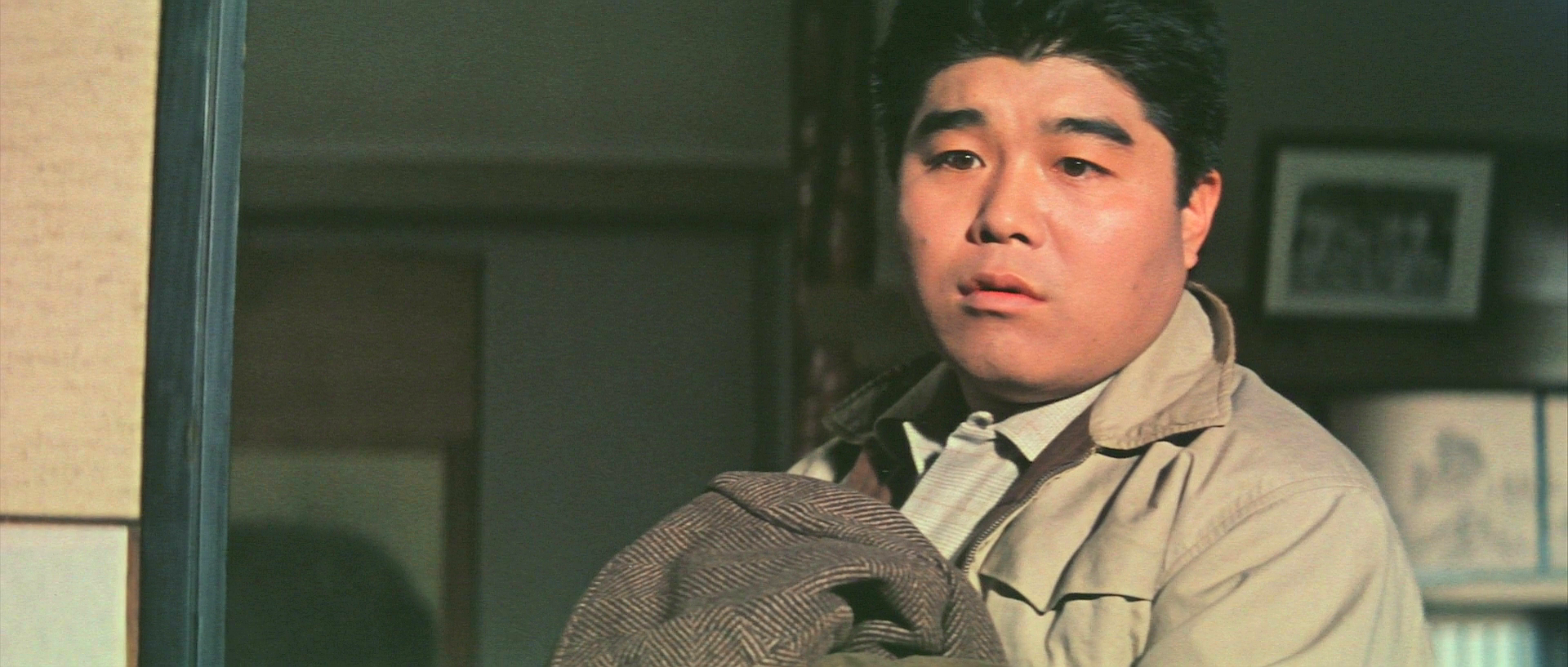
Ganjiro Nakamura


This Toho production was based on Oishi saigo no ichinichi (‘Oishi’s Last Day’), part of the Genroku Chushingura series of kabuki plays written by Seika Mayama in the 1930s which revolved around the famous Ako Incident.* Understandably, then, the cast consists largely of actors from the kabuki theatre, although their performances here are not stagy and are, in fact, perfectly appropriate for the cinematic medium. Running a mere 53 minutes, it was the sixth film in the ‘Toho Diamond’ series, which were stand-alone B-movies adapted from various literary works with running times of around an hour.


It was also the third film directed by Hiromichi Horikawa, a former assistant to Kurosawa who made some good films but perhaps never lived up to his early promise. Here, obviously working on a tight budget, he omits the attack completely and the film mainly consists of people talking on tatami. However, thanks in part to Horikawa’s precise blocking and effective camera placement, it nevertheless makes for compelling drama, and Masaru Sato’s subtle, unintrusive score is also a definite asset. There’s also a nice line in dry humour, perhaps provided by another Kurosawa collaborator, screenwriter Ryuzo Kikushima, who co-wrote the screenplay with Tokuhei Wakao – at one point, the men realise that none of them know the correct etiquette for committing seppuku as they’ve never seen anyone actually do it, while when Omino attempts to disguise herself as a man in order to gain access to her fiancé, Oishi takes one look at her and says something to the effect of, ‘You wouldn’t happen to be a woman by any chance, would you?’ For me at least, this modest little film is a gem which deserves a higher rating than the 5/10 it currently has on IMDb.


Ogi in feminine and masculine guises


*This series of plays had already been the basis for Kenji Mizoguchi’s two-part film of 1941-2.


BONUS TRIVIA: The film led to the marriage of actors Tojuro Sakata and Chikage Ogi, the latter of whom later became a politician. 


If you enjoy this blog, feel free to Buy Me a Coffee.


Monday, 26 May 2025

Onna no saka / 女の坂 (‘A Woman’s Uphill Struggle’, 1960)

Obscure Japanese Film #190


Mariko Okada

Nobuko Otowa

Keiji Sada


DVD at Amazon Japan (no English subtitles)

Sunday, 17 November 2024

Tokyo Onigiri Girl / 東京おにぎり娘 / Tokyo onigiri musume / (aka ‘Triangle Moods’, 1961)

Obscure Japanese Film #149


Ayako Wakao and Ganjiro Nakamura

Ganjiro Nakamura and Murasaki Fujima

Hiroshi Kawaguchi

 
Junko Kano

Yunosuke Ito


Jerry Fujio


Thursday, 31 October 2024

Hot Spring Doctress / 温泉女医 / Onsen joi (1964)

Obscure Japanese Film #143


When a new doctor arrives to replace the old drunk Dr Yabuuchi (Ichiro Sugai) at a hot spring resort in Izu, the residents are shocked to learn that his replacement is (gasp!) a woman, Dr Shiotsuki (Ayako Wakao). She proves to be strong-willed and soon gains the respect of the often badly-behaved residents, who include Dr Yabuuchi’s best friend, randy old codger Tahei (Ganjiro Nakamura playing to type); Yabuuchi’s rotund son, Masahiko (Taro Marui), who looks after the local orphans; and cynical geisha Omura (Utako Shibusawa), who Dr Shiotsuki tries to talk out of having an abortion…


This Daiei production was the final entry in their series of five ‘onsen’ B-pictures which began with Onsen geisha in 1963 (not to be confused with Toei’s later ‘Onsen Geisha’ series which ran from 1968-75). It’s one of nine films that Wakao made with director Keigo Kimura (1903-86), a veteran who made his first film in 1930 and retired two films after this one, having directed 93 pictures. His filmography covers a wide range of genres, including a number of prestigious literary adaptations, and his 1955 film Sen-hime was nominated for the Palme d’Or. Like many of his movies, that one starred Machiko Kyo, whom he had been responsible for bringing to prominence with his 1949 film, A Fool’s Love. Hot Spring Doctress seems to represent something of a comedown for Kimura, whose work is hard to judge overall as so little of it is currently accessible. 

Taro Marui


On the whole, this is a rather dated but harmless comedy which is not as sexist as it might have been and passes the time pleasantly enough, getting by largely on the considerable charm of its star, Ayako Wakao. It’s also hard to dislike a film in which the romantic male lead is the portly Taro Marui, a Daiei contract actor who had scored a hit in Zuzushii yatsu (‘Shameless Guy’), a TV drama produced by Daiei in 1963. Marui subsequently received many offers from other TV production companies, but Daiei refused to loan him out. His career suffered when he spoke out about this, and he committed suicide in 1967.

Thanks to A.K., and to Coral Sundy for the English subtitles, which can be found here.

DVD at Amazon Japan